
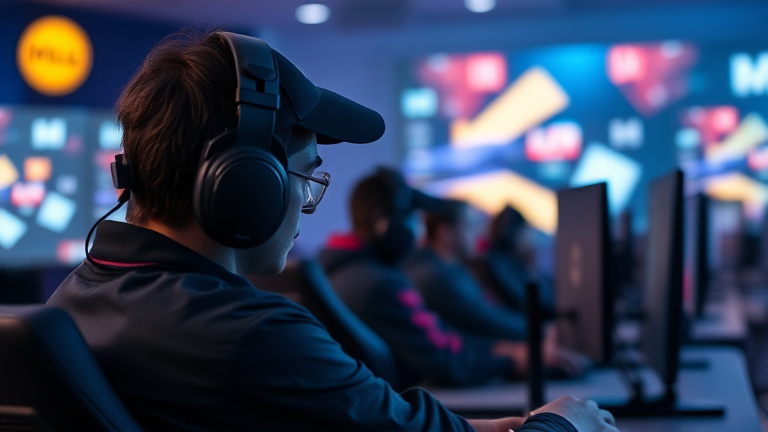
The esports industry has grown beyond basement tournaments into a billion-dollar enterprise, and professional gaming teams are proving it through unprecedented investments in advanced training facilities and premier coaching personnel. Just as traditional sports organizations, top esports teams now operate sophisticated practice environments equipped with advanced gaming systems, motion capture technology, and customized training programs designed to maximize player performance. This article analyzes how these major capital commitments are reshaping competitive gaming, the training methodologies revolutionizing player development, and why such infrastructure has emerged as vital for championship success.
Modern Educational Facilities
Professional gaming teams have transformed their approach to player development by establishing dedicated training facilities that rival traditional sports complexes. These centers feature temperature-regulated environments, properly designed workstations, and advanced networking systems designed to optimize performance. Teams invest millions in infrastructure because they understand that environmental factors directly impact player consistency, reaction times, and overall performance outcomes. The physical space itself becomes a strategic advantage, drawing elite players and enabling systematic skill development.
Modern training facilities surpass basic gaming stations to include comprehensive fitness programs, dietary guidance, and psychological support. Teams now hire sports psychologists, physical therapists, and nutritionists in addition to technical coaches to support holistic player development. This integrated approach addresses the demanding nature of professional esports, where cognitive sharpness, physical endurance, and emotional resilience shape championship performance. Funding for these multifaceted facilities shows teams’ commitment to establishing world-class performance settings.
Advanced Gaming Configurations
The cornerstone of any elite training facility rests on high-performance gaming equipment calibrated to tournament specifications. Professional teams invest in top-tier gaming PCs, low-latency displays, and peripherals that match official competition standards. This consistency ensures players train in conditions identical to championship events, eliminating variables that could affect performance. Redundant systems and additional gear prevent downtime, allowing teams to sustain intensive practice routines while ensuring equipment reliability and longevity.
Gaming systems within esports organizations require frequent enhancements to sustain technological superiority and performance leadership. Teams work directly with component suppliers to obtain next-generation parts prior to market launch, securing significant benefits in technical refinement. Each workstation gets custom configuration according to individual needs, comfort standards, and application-specific requirements. This personalized approach guarantees maximum comfort and efficiency, permitting players to dedicate themselves to technique refinement and tactical advancement in demanding training environments.
- Custom-built gaming PCs with overclocked processors and high-end graphics cards
- Ultra-fast monitors equipped with minimal response times for edge in competition
- High-performance mechanical keyboards and gaming-grade mice optimized for accuracy
- Professional audio systems enabling immersive positioning and competitive communication clarity
- Instant performance analysis software recording player metrics and in-game performance
Professional Coaching and Support Team
Professional gaming teams now utilize structured coaching frameworks that compete with traditional sports organizations in intricacy and refinement. These teams spend substantial resources in hiring seasoned coaching professionals who understand game mechanics, player psychology, and competitive strategy at the highest levels. The coaching staff functions as a unified unit to assess player abilities, tackle deficiencies, and create customized training programs that optimize results during pivotal competitions and league matches.
The backing framework extends beyond individual coaching to include sports mental health professionals, nutritionists, and performance analysts who collaborate to maximize all dimensions of athlete development. Teams understand that achieving success demands whole-person athlete development, tackling mental resilience, physical health, and tactical understanding at the same time. This cross-functional strategy has established itself as the standard practice among title-seeking teams aiming for sustainable competitive advantages.
Expert Coaching Positions
Modern esports teams employ specialized coaches dedicated to specific aspects of team performance and competitive strategy. Head coaches manage strategic direction and roster decisions, while role-specific coaches concentrate on player skill advancement within their respective roles. Some teams bring on dedicated analysts who analyze competitor video, identify strategic patterns, and deliver strategic guidance for upcoming matches and tournaments.
Mental performance coaches have become more essential in professional gaming, helping players handle stress, maintain focus during high-stakes competitions, and build mental toughness. Communication coaches work with teams to improve in-game callouts and decision-making speed. Additionally, many organizations hire ex-pros as coaches, leveraging their competitive experience and trust among active players.
- Head coaches establish overall team strategy and competitive tactics
- Position coaches concentrate on individual role development and mastery
- Analysts examine gameplay footage and recognize opponent patterns
- Mental performance coaches improve mental toughness and focus
- Former professionals offer experience-based guidance and mentorship
Performance Evaluation and Athlete Development
Modern professional esports organizations utilize detailed performance data to identify strengths and weaknesses in their athletes’ in-game performance. Advanced analytics platforms monitor strategic decision trends, response speed, precision metrics, and tactical placement across extensive match databases. This data-driven approach permits professional coaches to create personalized development plans focusing on particular areas of weakness. Teams spend substantial resources in purpose-built systems that offers real-time feedback during practice sessions, enabling players to promptly refine their methods and game plans for optimal performance improvement.
Player development has transformed into a comprehensive, long-term commitment necessitating consistent evaluation and adaptation. Professional organizations now utilize sports psychologists, nutritionists, and fitness coaches alongside gaming specialists to ensure comprehensive athletic development. Regular performance reviews set defined standards and advancement markers, driving player engagement while maintaining accountability. This organized framework has considerably prolonged professional careers and improved overall team consistency, proving that systematic player development directly contributes to competitive success and sustained championship performance.
Evidence-Based Learning Approaches
Contemporary esports coaching centers utilize AI and machine learning algorithms to examine gameplay footage and determine winning tactics. Teams record every practice session and competitive match, establishing comprehensive databases that coaches analyze meticulously. Sophisticated visual analysis systems help players comprehend complicated game dynamics and strategic decision pathways in unprecedented detail. This technical foundation permits coaches to recognize minute behavioral patterns invisible to human observation, giving players with strategic edge. Individual training plans evolve continuously based on personal performance analytics, ensuring maximum efficiency and faster progression throughout the season.
Statistical analysis has emerged as critical to competitive esports strategy development and execution. Teams utilize specialized analysts who analyze opposing team behaviors, evolving meta-game dynamics, and emerging strategies across professional circuits. Real-time performance dashboards present key performance indicators during training sessions and tournament play, enabling immediate tactical adjustments. Predictive analytics enable squads to predict opposing team approaches and prepare counter-strategies proactively. This integrated data framework converts raw data into practical intelligence, giving well-funded organizations marked superiority over less technologically equipped teams in high-stakes professional tournaments.
- AI-powered gameplay analysis identifies performance patterns and improvement opportunities
- Machine learning models forecast best tactical decisions in competitive scenarios
- Real-time performance dashboards deliver instant feedback throughout practice and matches
- Opponent evaluation systems examine strategies, weaknesses, and emerging meta-game trends
- Personalized training algorithms adjust difficulty levels according to each player’s development
